


Sunrise Hot Air Balloon Guide: Magical Cappadocia From the Sky
Sunrise Hot Air Balloon Guide: Magical Cappadocia From the Sky
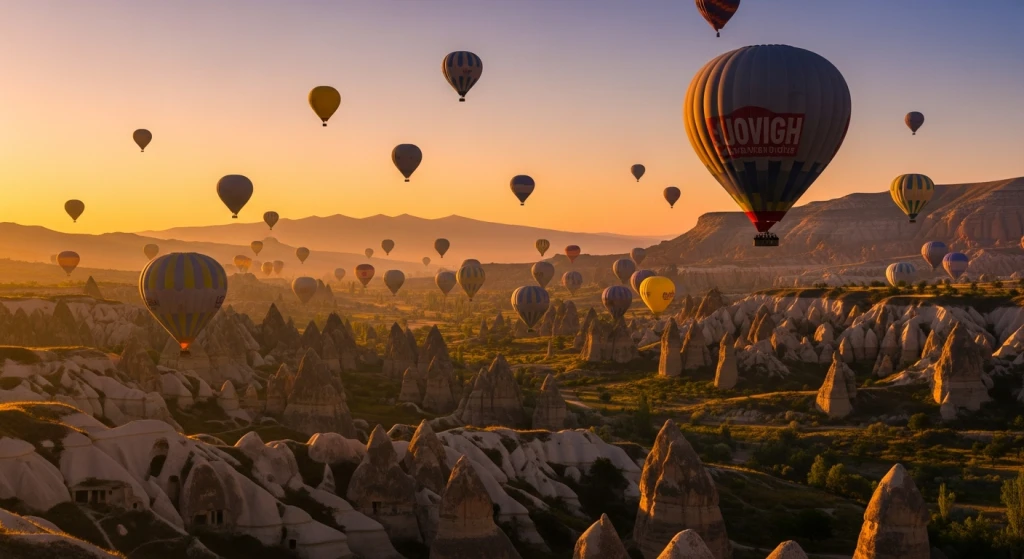
Watching the sun rise over Cappadocia from a hot air balloon is one of those travel moments that stays with you for life. The landscape looks like another planet—soft tuff valleys, fairy chimneys, distant volcanoes—and for one golden hour, hundreds of colorful balloons float silently above it all.
This guide focuses on the experience of a sunrise flight itself: how it works, what to expect, how to choose a company, and the tips that make the difference between “nice” and “utterly unforgettable.” For more inspiration around Turkey and Cappadocia in general, you can always browse the wider travel stories on the AirportTransfer Blog.
What Makes Cappadocia’s Balloons So Special?
There are hot air balloon rides around the world, but Cappadocia’s combination of terrain and weather is rare. The valleys are carved from soft volcanic rock, creating chimneys, caves, and ripples that catch the low morning light beautifully. Wind patterns are usually mild at dawn, allowing balloons to drift gently and maintain safe visibility over the valleys and small villages.
Crucially, this isn’t a once-a-week or seasonal novelty. In peak months, dozens and sometimes over a hundred balloons launch most mornings, creating an aerial festival of color. You’re not only seeing the landscape—you’re part of a sky full of balloons, which is a spectacle in itself.
Booking Your Sunrise Balloon: When and How
Best season for balloon flights
Balloons operate year-round, but your chances of flying are higher in spring and autumn:
April–June & September–October: Generally the best balance of clear skies, mild temperatures, and lighter winds.
July–August: Warm and dry, great visibility, but early mornings can still be chilly at altitude.
November–March: Fewer crowds and incredible snow-dusted scenery, but more weather cancellations.
Because Cappadocia has become world-famous, sunrise flights from popular bases like Göreme, Ürgüp, and Uçhisar sell out quickly—especially in April–May and September–October. Book as early as you can, and build at least two mornings into your itinerary in case of cancellations.
Choosing a balloon company
All balloon operators in Cappadocia are licensed and regulated, but there are still differences worth considering:
1. Safety record and experience
Check how long the company has been operating and read recent reviews, paying special attention to comments about pilot professionalism and pre-flight briefings.
2. Basket size and group feel
Standard flights typically use larger baskets (16–24 people). Deluxe or “comfort” flights use smaller baskets (8–12 people), giving everyone more space and easier access to the edge for photos. Private flights exist too, but at a premium price.
3. What’s included
Most packages include hotel pick-up, a simple pre-flight snack, and a celebration drink afterward. Some also include flight certificates or professional photos. Check the actual flight duration: 45–60 minutes is standard, 75 minutes for extended flights.
The Sunrise Balloon Experience, Step by Step
1. Pre-dawn pick-up and briefing
Expect a hotel pick-up roughly 60–90 minutes before sunrise. You’ll be taken to the launch area or a nearby office for registration. The crew will check the weather reports, confirm that conditions are safe, and explain basic safety rules—how to climb in and out of the basket, where to stand, and the landing position.
2. Watching the balloon inflate
Before you ever leave the ground, there’s a beautiful mini-show: wide envelopes lying on the ground puffing up with cold air, then roaring to life as burners shoot flames inside. The balloon slowly tilts upright, the basket steadies, and the sky begins to lighten in the east.
This is a great time to take photos of the glowing balloons against the blue pre-dawn sky and to ask your pilot questions about the route and conditions.
3. Lift-off and sunrise
Lift-off is surprisingly gentle. In a few seconds, the ground slips away, and the sound of the burners gives way to silence. As dozens of other balloons rise around you, Cappadocia’s valleys unfold beneath in soft layers.
Depending on wind direction, you might drift over Göreme’s fairy chimneys, the honeycombed cliffs of Love Valley, or the multicolored rock formations around Rose and Red Valleys. Pilots often alternate between low-level gliding (sometimes just above treetop level) and higher ascents for broad, panoramic views.
Usually, you’ll reach peak altitude just as the sun crests the horizon, painting the rock formations in rose, gold, and ochre. This is the moment most people travel here for—and it’s every bit as magical as it looks in photos.
4. Landing and celebration
Landings range from feather-soft to bumpy, depending on wind. Your pilot will remind you to bend your knees slightly, hold onto the straps or handles, and face the direction of travel. Ground crew typically meet the basket for a controlled touchdown.
Once you’re back on solid ground, many companies offer a small celebration—sparkling drink, light snacks, and a souvenir certificate—before dropping you off at your hotel in time for breakfast and a nap.
Essential Tips for a Perfect Flight
What to wear
Even in summer, it’s chilly before sunrise and colder at altitude. Dress in light layers: a T-shirt or base layer, a long-sleeve top, and a windproof jacket or hoodie. Wear long trousers and closed, flat shoes—no flip-flops or heels. A beanie or headband can be surprisingly useful if you’re sensitive to cold air.
Remember that burners generate heat overhead, so avoid very bulky jackets that might make you uncomfortable once the sun is up.
Camera and phone tips
You’re there for the views—make the most of them:
- Use a wrist strap or neck strap for your camera or phone; dropping it mid-flight means it’s gone.
- Clean your lens before boarding; early light reveals smudges clearly.
- Take some wide shots that show multiple balloons and the basket edge to capture the atmosphere, not just close-ups of rock formations.
- Put your phone on airplane mode to save battery; it’s a long, photo-heavy morning.
Health and safety considerations
Ballooning is generally smooth, but it’s not ideal for everyone. If you’re pregnant, have serious knee, back, or hip issues, or struggle to stand for an hour, consult your doctor and the operator beforehand. Children usually have minimum age or height requirements so they can see safely over the basket rim.
Seeing the Balloons from the Ground
Even if you’re nervous about flying, you can still enjoy the spectacle from Cappadocia’s hilltops and terraces. Many visitors choose to fly one morning and then watch from a scenic viewpoint on another day. You can find more ideas for combining ground-level adventures with sky-high ones by exploring related stories on the AirportTransfer Blog, which often highlights new experiences and hidden corners of the region.
Why Sunrise from the Sky Belongs on Your Bucket List
Cappadocia’s hot air balloons are not just a photo opportunity—they’re a gentle, immersive way to understand the scale and geology of the region. From above, you see how the valleys connect, how villages nestle into the rock, and how centuries of erosion shaped this surreal landscape.
If you’re planning a trip to Turkey and wondering whether the sunrise flight is worth the early wake-up, cost, and layers of clothing, the honest answer is yes. It’s one of those rare experiences where the reality not only matches the dream, but often surpasses it.
Our partners